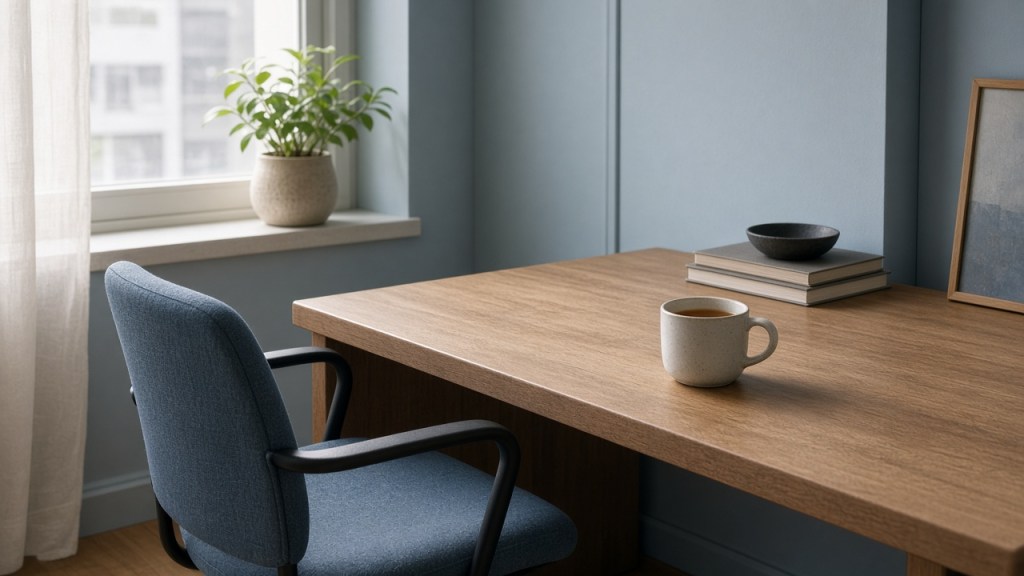
A complete guide for hybrid professionals and students in Singapore. After reading, you should be able to give a long desk day a kinder rhythm — regular breaks, small changes of position, and optional warmth when you want it.
In this guide
- Why rhythm matters more than one perfect sit
- How often to get up
- A rhythm you can keep in an office, at home or in a library
- Gentle movement between sits
- Warmth at the end of the day
- If you only change one thing
- FAQ
- Sources
A comfortable desk day is less about holding one ideal posture than about how the hours are shaped. You sit, you change position, you stand, you walk a little, you sit again. In a Singapore office, that can be the stroll to a meeting room or a hawker-centre lunch. At home, or in a hall room during reading week, those natural interruptions disappear unless you put them back in.
This guide is about that rhythm. It is general information, not medical advice. The aim is a more comfortable day at the chair you already have, not a new routine you will abandon by Wednesday.
Why rhythm matters more than one perfect sit
Sitting itself is ordinary. Sitting still, in one shape, for most of the day is what usually makes a chair feel harder as the afternoon goes on. HealthHub Singapore is clear that there is no single best posture to hold all day. A sit you can leave, and return to in a slightly different shape, will usually serve you better than a rigid pose.
This is also why accessories and chair adjustments, useful as they can be, are only part of the story. A more supportive seat still asks you to stay there. The habit that does the most work is the one that gets you out of the chair.
A Straits Times commentary on sitting and standing at a desk, published in 2023 and later updated, made a similar distinction. Interrupting long periods of sitting by standing or walking is more useful than simply swapping one static position for another. Prolonged standing has drawbacks of its own. The point is not to find a perfect pose. It is to give the day a rhythm.
Harvard Health, in its everyday sitting advice, likewise puts regular movement beside any discussion of lumbar support at a desk.
How often to get up
You do not need a perfect timetable. You need an interval you will actually keep when the calendar is full.
Mayo Clinic suggests changing position at least every half hour. HealthHub’s working figure is about the same: change posture about every thirty minutes. Harvard Health, in the piece already cited, speaks of movement about every hour. The ranges overlap. The useful choice is the shorter interval you can keep, not the strictest one you will ignore.
A short stand is enough. You do not need to leave the building. Standing to take a call, walking to refill water, or simply getting up between tasks already breaks the stillness. If a meeting overruns, stand at the first natural pause rather than waiting for a perfect gap that may not come.
A rhythm you can keep in an office, at home or in a library
The same principle travels. The interruptions look different in each room.
In an office, use what the building already gives you. Walk to a meeting instead of dialling in from your desk when you can. Take the slightly longer route back from lunch. Stand for the first minute of a call if the setting allows it. The air-conditioning may be cold; a light layer and a chance to move often help more than sitting hunched until the next booking.
At home, you have to invent the interruptions. A kettle, a corridor, the letterbox downstairs or a short loop after a finished task can all serve. The risk of a home day, as some local commentary has noted, is that work and the rest of life blur into one long sit at the dining table. Closing the laptop at a set time, and leaving the chair, helps the day end.
In a campus library or a hall room, the constraints are tighter. You may not want to leave your seat for long. A stand at the end of a chapter, a short walk to a water cooler, or a shift of position every half hour is still available. Revision weeks are long precisely because the natural breaks of a teaching day have gone. The rhythm has to be put back in by hand.
Gentle movement between sits
You do not need gym clothes, and you do not need to turn every break into a workout. The point is to change position and to move a little, in a range that feels comfortable.
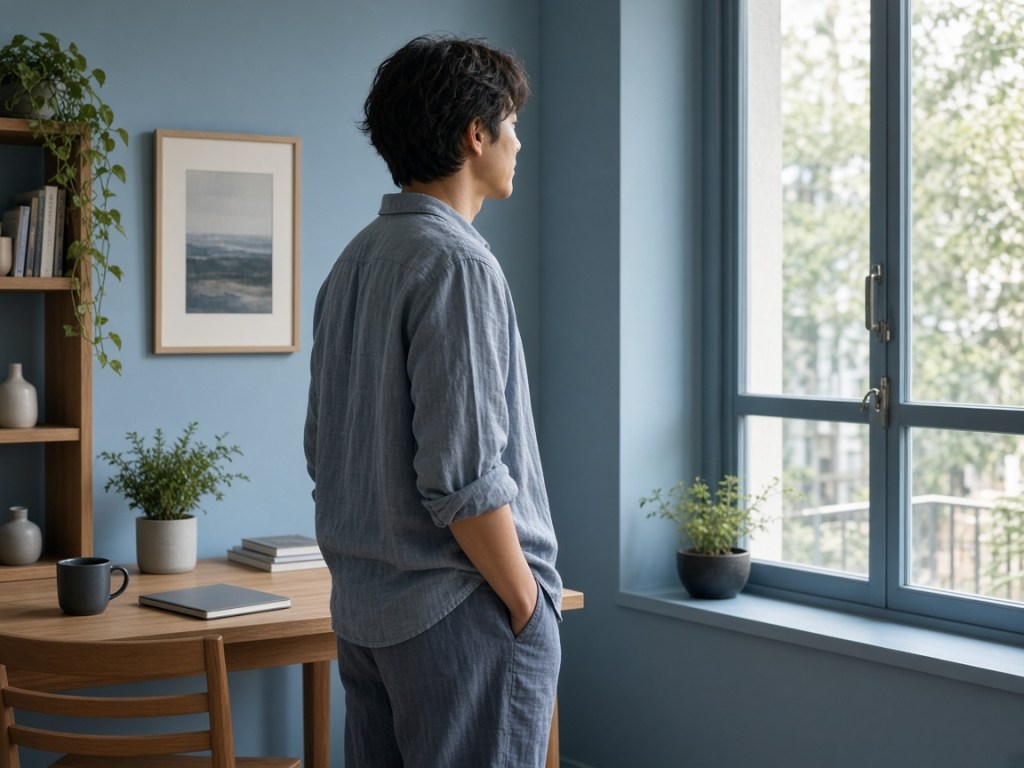
The NHS sitting-exercise set is a calm, official starting point if you want a short routine on a stable chair. It is optional. Follow it only insofar as it feels comfortable, and stop if it does not.
Between those optional exercises, ordinary movement is enough: standing, a short walk, shoulder rolls, looking at something farther away than the screen. HealthHub’s advice for people who work at a screen also encourages regular breaks and movement at home. None of this needs to look like a fitness class, and none of it is a treatment plan.
Warmth at the end of the day
Warmth is an optional comfort, not a requirement and not a treatment. After a long sit, some people like a warm shower, a short walk in the evening air, or a heat pack or warm-water bottle wrapped in a cloth. Others prefer to skip it. Both are reasonable.
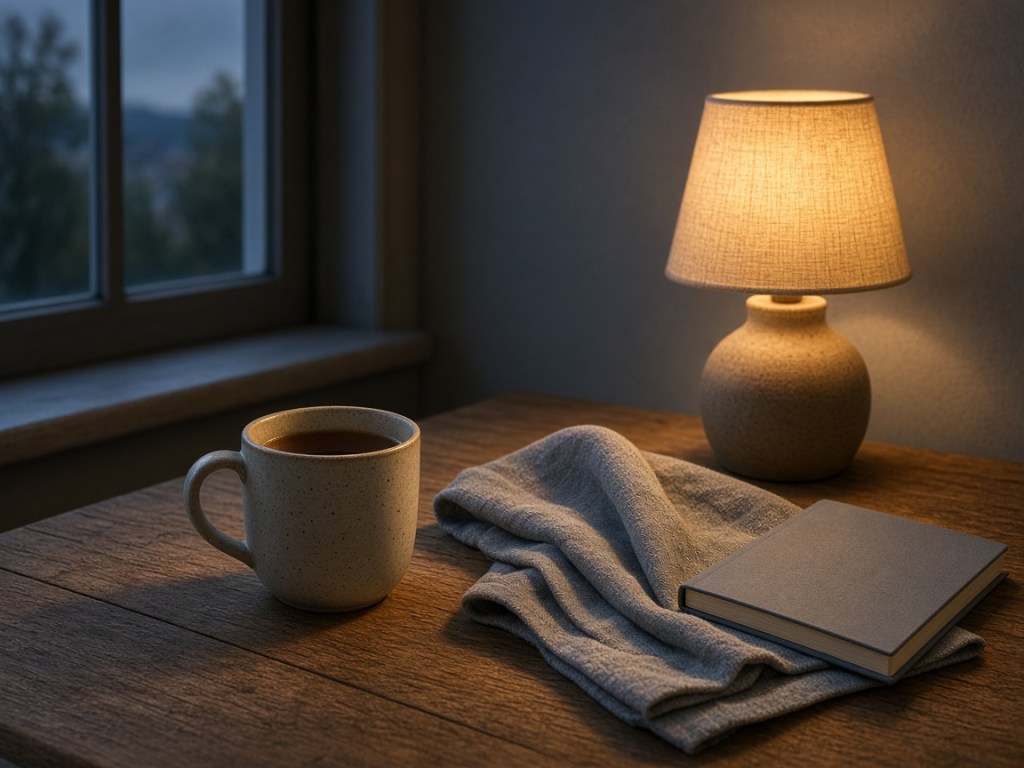
Institutional advice about heat is mostly about warmth for comfort and stiffness in the short term, and it comes with simple safety. The NHS describes a heat pack or a hot-water bottle wrapped in a tea towel. Harvard Health similarly advises warmth that is warm, not uncomfortably hot, and avoiding heat on swollen or freshly injured skin. Keep sessions brief. Do not fall asleep on a heat pack.
Warmth does not replace movement, sleep or professional care. If something feels wrong, or discomfort is severe or persistent, see a clinician rather than adding another comfort tool.
If you only change one thing
Pick one day this week and stand up every half hour. That is already a more comfortable rhythm. If you like a little warmth in the evening, keep it gentle and brief.
FAQ
Do I need a standing desk to make this work?
No. A standing desk can be useful if you already have one and you alternate, but the habit that matters is interrupting long sits. You can do that from an ordinary chair.
What if I forget until I already feel stiff?
Stand up then, and start the interval from that point. A missed break is not a reason to abandon the rest of the day.
Can I do this on a day of back-to-back calls?
Yes, in a smaller way. Stand for a minute between calls, or for the first minute of one. Walk when a meeting ends, even if the next one is soon. The full half-hour habit can return when the calendar eases.
Is warmth necessary?
No. It is an optional end to the day for people who like it. Movement and a change of scene matter more.
Is it all right to use a heat pack after studying or working late?
If you choose to, keep it warm rather than hot, wrap it in a cloth, keep the session short, and avoid swollen or freshly injured skin. It is a comfort, not a treatment.
When should I see a professional instead of changing my routine?
If discomfort is severe, persistent or worrying, or if you notice symptoms such as weakness, numbness, or a change in bladder or bowel control, see a healthcare professional. A kinder desk-day rhythm is not a substitute for care.
Sources
- Mayo Clinic. Back pain — symptoms and causes (change position at least every half hour).
- HealthHub Singapore. Self-help tips to manage pain (change posture about every thirty minutes).
- HealthHub Singapore. Nine ways to be a healthy, happy telecommuter (breaks, screen habits, and movement at home).
- HealthHub Singapore. Low back pain (no single best posture).
- Harvard Health Publishing. Reduce or avoid back pain during these everyday activities (movement about every hour).
- Harvard Health Publishing. Cold versus heat — how to use them safely (warm, not uncomfortably hot; avoid swollen or freshly injured skin).
- NHS. Back pain (heat pack or hot-water bottle wrapped in a tea towel; stay active).
- NHS. Sitting exercises (optional gentle chair-based movements).
- The Straits Times. There is more to just sitting or standing at your desk (Sep 2023, updated 2024): interrupting long sitting is more useful than swapping one static position for another.
A soft next step. Pick one day this week and stand up every half hour. If you like a little warmth in the evening, keep it gentle and brief. That is already a more comfortable rhythm.

